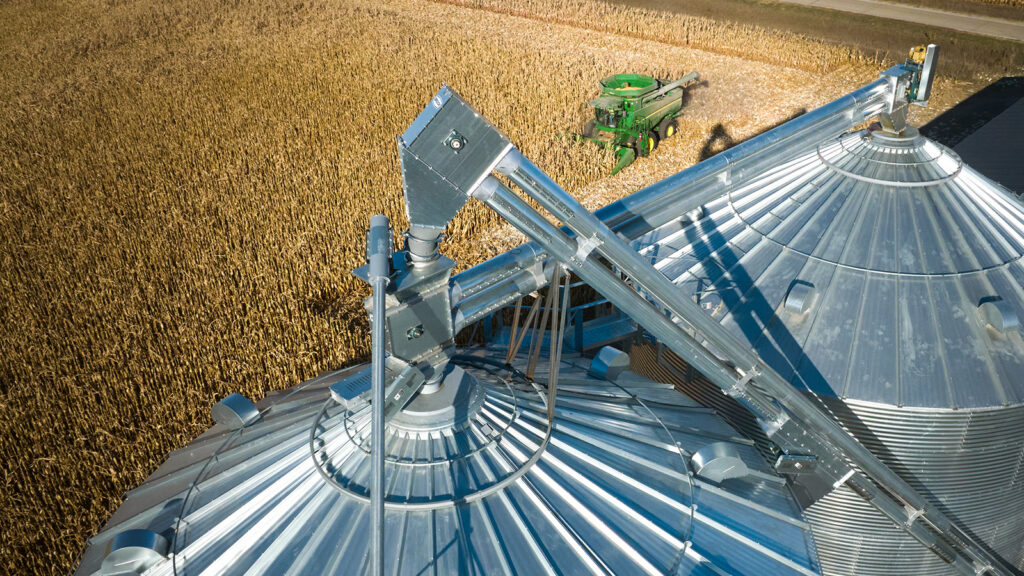
 Harvest is now underway and folks are getting after it a little earlier than we’ve seen the last few years. Corn’s ahead of the five-year average and beans aren’t far behind. Yields are looking good so far and always a welcome sight. But this is also the time of year when grain bins turn into the most dangerous spot on the whole farm or operation.
Last year, Purdue’s Ag Safety and Health Program counted 48 confined-space accidents in agriculture. Twenty-two of those were fatal. Nearly half involved grain entrapment. The University of Minnesota Extension lays it out simple: once grain starts flowing, it can pull a grown adult down to their knees in about four seconds. In twenty seconds, they’re completely buried making self-rescue nearly impossible. Eight different fire departments responded when an Illinois farmer was trapped in August of last year and it still turned into a recovery mission. Most cases happen right in the middle of where this year’s corn and bean crop is coming out of the field today; Iowa, Indiana, Illinois, Minnesota and Nebraska.
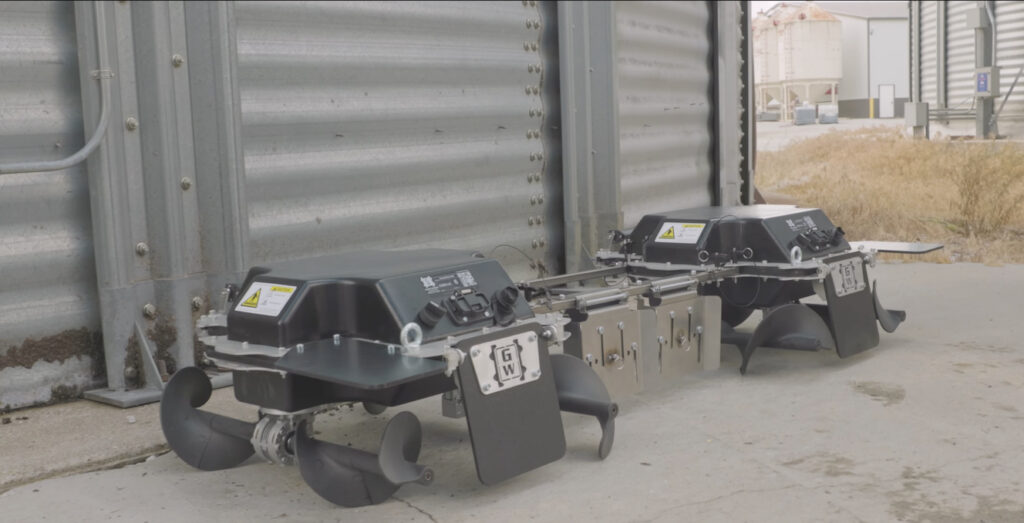
For large commercial grain facilities, slow is not in their vocabulary. When grain is moving, bins need to turn fast, crews need to stay on task, and every hour of downtime has a dollar amount attached to it. One robot inside a 48-foot bin does real work. Two robots working in coordinated tandem? That changes the math entirely.
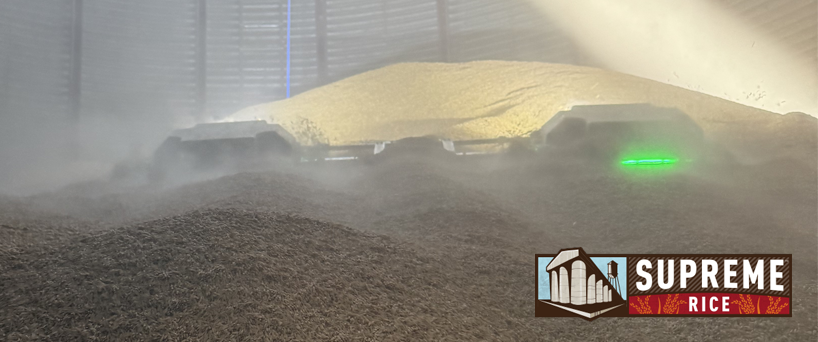
The Grain Weevil Dual Robot setup pairs two robots on a single frame, running synchronized passes across the bin surface, maximizing throughput for high-capacity operations. No overlap. No gaps. No person stepping into the bin. Supreme Rice is already running two sets of dual robots in their 48-foot bins and reporting that what once took hours of manual labor now gets done faster, safer and with no bin entry required. For grain elevators, co-ops and large commercial operations, that kind of throughput isn’t just efficient, it’s a competitive advantage.